How to Choose Attractions That Work for Large Crowds
Planning entertainment for a large event can look simple on paper. You choose a few attractions, place them around the venue, and expect guests to spread out naturally. In reality, large crowds behave differently. Lines build quickly, certain areas get overloaded, and some attractions sit underused while others struggle to keep up.
This is why choosing large crowd entertainment is not just about what looks exciting. It is about capacity, visibility, movement, and how people interact with the space over time. The most effective attractions do more than entertain. They help the entire event function better.
This guide breaks down how to evaluate attractions for large events, how to improve flow, and how to choose options that keep guests engaged without creating bottlenecks.
What Makes an Attraction Work for a Large Crowd?
At smaller events, almost any activity can feel successful. At larger events, the standard changes. A strong attraction must handle volume while still keeping guests engaged.
The most effective attractions for big events usually share a few key traits:
- They allow continuous participation, not one-at-a-time usage
- They are easy to understand without explanation
- They remain visually engaging, even from a distance
- They can cycle large numbers of guests efficiently
If an attraction creates long pauses, confusion, or slow turnover, it can affect the entire event area around it.
Capacity Matters More Than Novelty
It is easy to focus on attractions that look impressive or unique. But for large events, capacity almost always matters more than novelty. A visually exciting attraction can still underperform if only a few guests can participate at a time.
When evaluating high-capacity event attractions, consider:
- How many guests can participate within a short period
- How long each cycle or turn takes
- How quickly new participants can join
- Whether the attraction requires constant supervision
The goal is not to eliminate variety. It is to ensure your event includes enough high-capacity options to absorb demand and keep energy moving.
How Attractions Change Based on Crowd Size
One of the most important factors in event planning is understanding how needs shift as attendance increases. Attractions that work well for smaller gatherings often struggle at scale.
50–100 Guests
At this size, most attractions perform well. You can include a mix of smaller and medium-capacity options without creating significant congestion.
100–300 Guests
This is where capacity becomes more important. You will need at least one or two attractions that can handle continuous participation, along with supporting activities to distribute the crowd.
300+ Guests
At this level, attraction selection directly impacts event success. High-capacity, visually engaging setups become essential. Without them, long lines and overcrowding can reduce overall engagement.
As attendance grows, the role of each attraction shifts from simple entertainment to active crowd management.
How to Choose the Right Mix of Attractions
Large events work best when attractions are selected as part of a system rather than as individual features. Instead of asking what looks the most exciting, it helps to think about how each piece contributes to the overall experience.
A balanced setup often includes:
- Anchor attractions that draw attention and handle large volumes
- Supporting attractions that distribute guests across the event
- Flexible activity zones that allow movement and reduce congestion
This combination helps prevent overcrowding while keeping the event engaging from start to finish.
High-Impact / Extreme Attractions
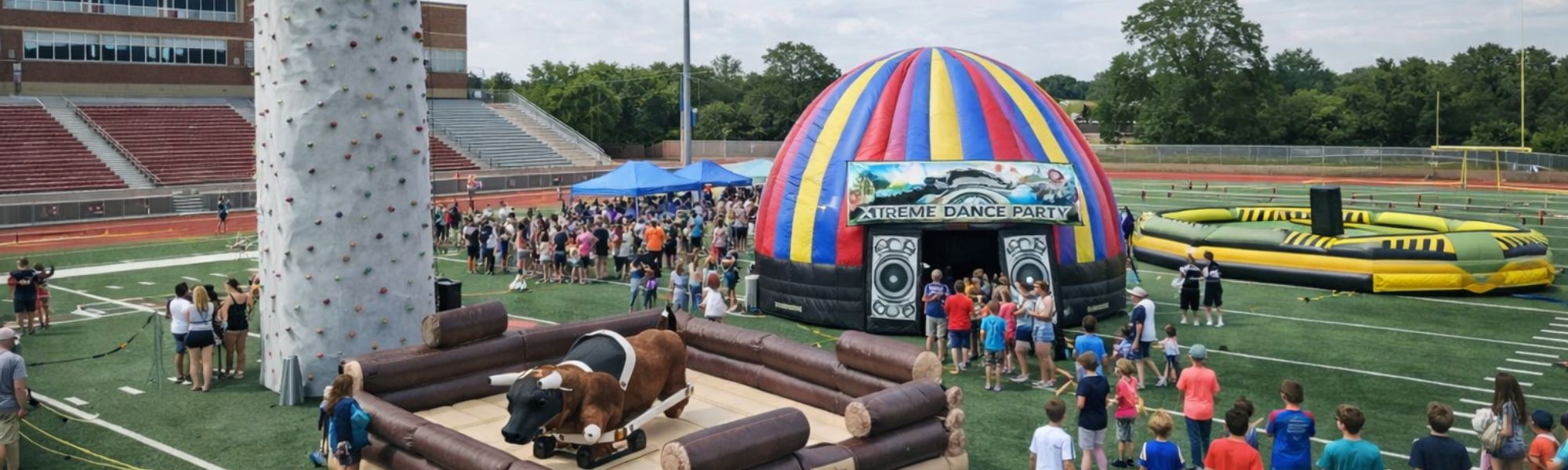
For larger events, high-impact attractions can help elevate the overall experience and draw attention from across the venue. These are often referred to as extreme attractions because they create a strong visual presence and deliver a more memorable, high-energy experience.
Examples include larger-scale interactive setups designed for visibility and excitement. You can explore options like extreme attraction rentals, which are commonly used to anchor larger event spaces and create focal points that naturally attract and engage guests.
These types of attractions are most effective when paired with high-capacity options. While they may not always serve the highest number of participants per hour, they play a key role in shaping the overall energy and perception of the event.
How Crowd Flow Changes Entertainment Decisions
Entertainment and movement are directly connected. If one area becomes congested, it affects more than the guests waiting in line. It changes how people move through the entire event.
That is why event flow planning should be considered early. Strong layouts include clear pathways, visible attractions, and enough space for guests to watch, wait, and move comfortably.
Anchor Attractions
These define the energy of the event and attract the most attention.
Supporting Attractions
These help spread guests across the event instead of concentrating them in one place.
Transition Space
Open areas allow guests to move naturally between activities without creating congestion.
Why Certain Attractions Perform Better at Large Events
Some attraction types naturally support large crowds better than others. These typically involve continuous movement, clear participation, and strong visual presence.
For example, attractions like water slide rentals are often used at large events because they allow ongoing participation and remain visually engaging throughout the day. Guests can quickly understand how to use them, and they help maintain steady activity without constant direction.
The goal is not to rely on one attraction type, but to choose options that support both engagement and flow.
Common Mistakes That Disrupt Large Events
Even well-planned events can struggle if attraction selection is too narrow or unbalanced.
- Choosing attractions based only on appearance instead of capacity
- Placing all high-interest attractions in one area
- Underestimating space needed for lines and spectators
- Relying too heavily on low-capacity activities
- Ignoring how timing and weather affect guest behavior
Most of these issues come from treating attractions as isolated features rather than part of a larger system.
How Experienced Planners Think About Crowd Engagement
Experienced planners focus less on individual attractions and more on how the crowd will interact with the entire setup.
They consider:
- How many guests need to be engaged at once
- Where pressure points may develop
- Which attractions can maintain energy over time
- How visible activity influences guest movement
This approach turns simple entertainment into effective crowd engagement ideas that keep events active and organized.
FAQ: Large Crowd Entertainment and Event Planning
What makes an attraction suitable for large crowds?
Attractions that support continuous participation, are easy to understand, and can serve many guests quickly tend to perform best.
Why is capacity more important than appearance?
At large events, low-capacity attractions can create long lines and slow down the overall experience, even if they look appealing.
How do you reduce long lines at events?
Use a mix of high-capacity attractions and supporting activities to distribute guests evenly across the event.
What is the best way to plan attraction layout?
Combine anchor attractions, supporting activities, and open transition space to allow natural movement.
Where can I find more large event planning ideas?
Explore the large events blog category for more strategies on event layout, attraction selection, and crowd management.
Conclusion
Choosing attractions for large crowds is not just about entertainment. It is about building an environment that supports movement, engagement, and flow.
When attractions are selected with capacity and layout in mind, events feel more organized, guests stay engaged longer, and the overall experience improves. Taking the time to plan around how people move—not just what they do—leads to stronger results at any scale.
If you want to explore more ideas and planning strategies, reviewing additional large event guides can help you refine your setup even further.