
End-of-School Parties Kids Actually Remember
The final school bell often feels like a milestone. Students have spent months learning, growing, building friendships, and working toward summer break. By the time the last day arrives, excitement is already at its peak.
That anticipation creates the perfect opportunity for a celebration. Yet many end-of-school events blend together because they focus more on gathering people in one place than creating experiences that keep everyone involved.
The celebrations kids remember are usually the ones that encourage participation, movement, and shared moments with friends. Whether the event takes place at a school, park, church, or community space, creating opportunities for students to interact and stay engaged often has a bigger impact than decorations or party favors.
This guide explores practical ways to plan a memorable school-year wrap-up event that keeps kids active, connected, and excited about the start of summer.
Why End-of-School Celebrations Matter
School-year celebrations mark more than the beginning of summer vacation. They give students a chance to recognize accomplishments, strengthen friendships, and reflect on experiences they shared throughout the year.
Unlike birthday parties, end-of-school events often involve larger groups with a common connection. That shared experience creates opportunities for activities that focus on teamwork, interaction, and group participation.
The goal is not simply to entertain students. It is to create positive memories that help close one chapter before the next begins.
What Makes a School Celebration Memorable?
Think back to events you remember from childhood. Chances are you remember what you did far more than what you ate or what decorations were hanging nearby.
The same principle applies to end-of-school events. The strongest memories often come from activities that encourage participation rather than observation.
Students tend to remember:
- Activities that involve their friends
- Experiences that encourage movement
- Opportunities to explore and interact
- Moments that feel different from everyday school routines
When planning activities, focusing on engagement often produces better results than focusing solely on entertainment.
Keeping Kids Active Throughout the Event
One challenge many organizers face is maintaining energy levels throughout the celebration. Kids can become disengaged when there are long periods of waiting, sitting, or transitioning between activities.
Creating multiple opportunities for movement helps solve this problem.
Group Challenges
Relay races, team competitions, and obstacle-style activities encourage students to participate together while adding excitement to the event.
Open Play Opportunities
Not every child enjoys structured competition. Open-play activities allow students to engage at their own pace while remaining involved in the celebration.
Interactive Activity Zones
Activities that allow continuous participation help maintain energy because students can join, leave, and return whenever they choose.
If you're looking for additional ways to keep groups engaged, our guide to bounce party activities explores several approaches that encourage participation throughout an event.
Creating Space for Different Personalities
One of the easiest planning mistakes is assuming every student enjoys the same type of activity.
Some children enjoy competition and excitement. Others prefer creative activities, social interaction, or less structured experiences.
A well-rounded celebration often includes:
- Active group games
- Independent activities
- Collaborative challenges
- Areas for socializing and relaxing
Providing variety helps more students feel comfortable participating.
Why Movement-Based Entertainment Works So Well
Students spend much of the school year following schedules, sitting in classrooms, and moving through structured routines. End-of-school events provide a chance to break away from that environment.
Activities that encourage movement often become the centerpiece of the celebration because they allow students to be active while interacting with friends.
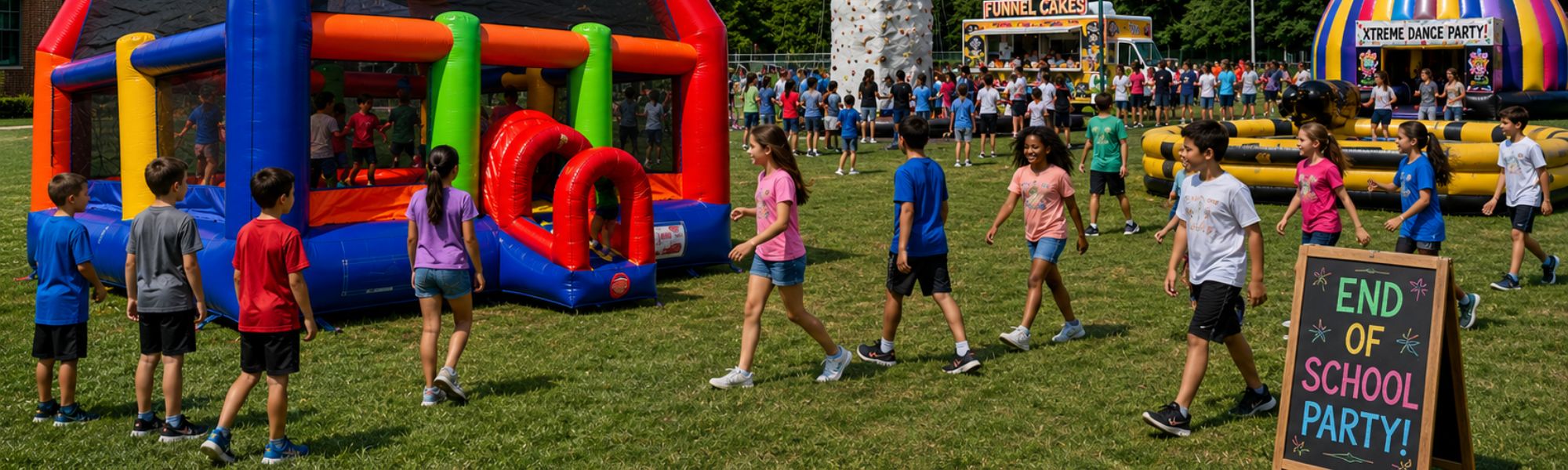
Many organizers include attractions such as bounce house rentals because they support continuous participation and create an environment where kids can stay active without needing constant instruction.
Simple, accessible activities frequently create the strongest engagement.
Planning for Larger Groups
School celebrations often involve dozens or even hundreds of participants. As attendance increases, activity selection becomes more important.
High-participation activities generally perform better because they reduce wait times and allow more students to engage simultaneously.
When evaluating activities, it helps to ask:
- How many students can participate at once?
- Will students remain engaged while waiting?
- Can activities accommodate different age groups?
- Does the activity encourage interaction?
Thinking about participation capacity often leads to smoother and more enjoyable events.
Common Mistakes That Reduce Participation
Even well-planned celebrations can lose momentum when a few common issues appear.
- Overloading the schedule with too many activities
- Creating long periods without interaction
- Choosing activities with limited participation capacity
- Relying too heavily on passive entertainment
- Making games overly complicated
Many successful events keep things simple and focus on creating opportunities for students to participate naturally.
How Experienced Organizers Approach School-Year Wrap-Up Events
Experienced planners typically focus on overall engagement rather than individual attractions. Instead of asking which activity looks the most exciting, they consider how students will move through the event and interact with one another.
This approach helps create celebrations that feel energetic, inclusive, and memorable for a wide range of participants.
For additional inspiration and planning strategies, explore more resources in our bounce house blog category, where you'll find guides covering activities, event planning, and group entertainment ideas.
FAQ: End-of-School Party Ideas
What are the best end-of-school party activities?
Activities that encourage movement, interaction, and teamwork tend to create the most memorable experiences for students.
How do you keep kids engaged during a school celebration?
Providing multiple activity options and minimizing downtime helps maintain participation throughout the event.
Should end-of-school events include structured games?
A combination of structured activities and open-play opportunities often creates the best balance for larger groups.
What makes a school-year wrap-up event memorable?
Shared experiences, active participation, and opportunities for students to spend time with friends often leave the strongest impression.
How many activities should an end-of-school event have?
Focus on quality rather than quantity. A smaller number of engaging activities often performs better than a packed schedule.
Conclusion
The end of the school year deserves more than a simple gathering. It is an opportunity to celebrate accomplishments, friendships, and the excitement of summer ahead.
By focusing on participation, movement, and shared experiences, organizers can create events that students genuinely enjoy and continue talking about long after summer begins.
The most memorable celebrations are often the ones that bring people together, keep them engaged, and allow them to finish the school year on a positive note.