
A Parent’s Guide to Planning High-Energy Kids’ Parties
Planning a kids’ party sounds easy at first—pick a theme, invite friends, and set out a few activities. But once the party starts, it becomes clear how quickly energy can shift. Kids lose interest, attention drifts, and what felt like a solid plan suddenly feels scattered.
That’s why more parents are focusing on high-energy party planning—not to make things louder or more chaotic, but to create a steady flow of engaging, age-appropriate activities that keep kids involved from beginning to end.
This guide breaks down how to plan a party that feels active, organized, and easy to manage—without overcomplicating the experience.
What Actually Makes a Kids’ Party High-Energy?
A high-energy party isn’t about packing the schedule or filling every second. It’s about creating an environment where movement, interaction, and engagement happen naturally.
At a foundational level, strong parties share three characteristics:
- Activities that encourage movement and participation
- A layout that allows kids to explore without constant direction
- A mix of structured and open-ended experiences
Where many parties struggle is in over-planning or under-planning. Too many structured activities can feel rigid, while too little direction can lead to boredom. The goal is to create a balance where energy builds and sustains itself.
For example, a party with only seated activities will naturally lose momentum. On the other hand, a setup that allows kids to rotate between active zones tends to maintain excitement without constant supervision.
Choosing Activities That Match Age and Energy Levels
Not all kids party activities work for every group. One of the most important parts of planning is aligning activities with how kids naturally play at different ages.
Younger Kids (Ages 3–6)
Younger children tend to engage best with simple, flexible activities that don’t require complex rules.
Common approaches include:
- Open play environments
- Basic group games with clear instructions
- Activities that allow kids to move freely without competition
At this stage, the focus is less on structure and more on exploration.
Elementary Age (Ages 7–10)
This group thrives on a mix of independence and group interaction.
Effective activity types include:
- Relay-style games
- Rotating activity stations
- Light team-based challenges
Kids in this range enjoy variety. Giving them multiple ways to engage helps maintain attention and keeps energy levels consistent.
Older Kids (Ages 10+)
As kids get older, their expectations shift. Activities need to feel more engaging and slightly more challenging.
This might include:
- Timed challenges
- Competitive group games
- Larger interactive setups that keep multiple participants involved
At this stage, the energy is still there—but the experience needs to feel more intentional.
Types of High-Energy Party Setups (And When to Use Them)
One of the biggest differences between an average party and a memorable one is the type of setup used. Instead of relying only on individual games, many successful parties are built around a central activity or layout that anchors the entire experience.
Here are the most common types of high-energy setups:
Open Play Setups
These allow kids to move freely between activities without strict rules.
Best for:
- Younger age groups
- Mixed-age parties
- Casual, low-pressure environments
They’re easy to manage but can lose momentum if there’s no focal point.
Structured Game Zones
These involve planned activities with clear start and end points.
Best for:
- Medium-sized groups
- Kids who enjoy organized play
- Short bursts of focused activity
They work well but require more coordination and supervision.
Large Interactive Features (Activity Anchors)
This is where many high-energy parties find their rhythm.
Instead of constantly directing kids from one activity to another, these setups create a central space where kids naturally stay engaged. They reduce downtime, simplify supervision, and help maintain consistent energy throughout the event.
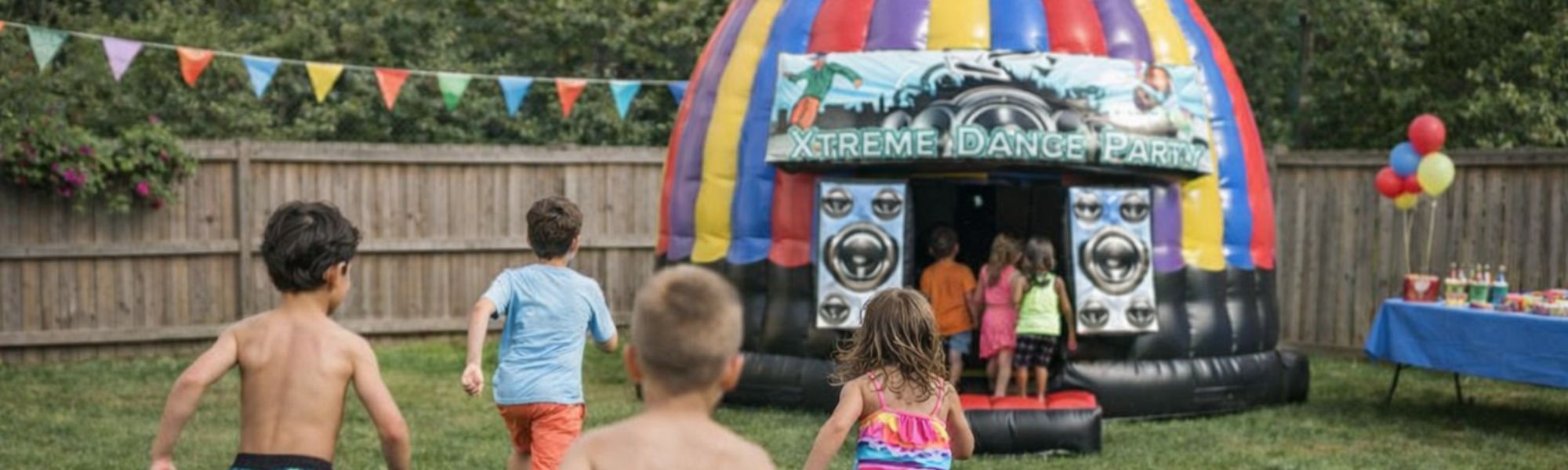
Examples include interactive inflatables and combination units that allow multiple kids to play at once. You can see how these are typically structured by exploring options like bounce houses and combo bouncers, which are often used as the main activity hub during high-energy parties.
These types of setups aren’t about filling space—they help create flow.
Hybrid Layouts
Some of the most effective parties combine multiple elements:
- A central activity anchor
- One or two structured games
- Open play areas
This approach allows kids to move between activities naturally while keeping the overall experience organized.
How to Balance Structure and Free Play
One of the most common mistakes in party planning is misunderstanding pacing.
Too much structure can make the party feel rigid.
Too little structure can cause energy to drop.
A balanced approach typically looks like this:
- Arrival period: Open play to let kids settle in
- Mid-event: One or two structured group activities
- Main attraction: Ongoing central activity that keeps kids engaged
- Flexible time: Space for kids to move freely
This rhythm helps maintain energy without forcing constant transitions.
Common Mistakes That Disrupt Party Flow
Even well-planned events can lose momentum if a few key details are overlooked.
Here are some of the most common issues parents run into:
- Planning too many activities → kids lose interest quickly
- Long gaps between activities → energy drops fast
- Overly complicated games → confusion replaces fun
- Limited space for movement → kids feel restricted
Simplifying the plan often leads to a smoother, more enjoyable experience.
How Experienced Planners Approach Kids’ Parties
Professionals tend to think about parties differently than most first-time planners.
Instead of focusing only on individual activities, they look at:
- Flow – How kids move through the space
- Engagement – How long activities hold attention
- Energy shifts – When to introduce structure vs flexibility
They also rely heavily on setups that reduce the need for constant direction. When kids can stay engaged on their own, the entire event becomes easier to manage.
This approach doesn’t require more effort—it requires better structure.
FAQ: Kids Party Activities & High-Energy Planning
What are the best kids party activities for high-energy events?
Activities that involve movement and group interaction tend to work best. This includes relay games, challenge-based activities, and setups that allow multiple kids to participate at once.
How many activities should I plan for a party?
Most parties only need a few well-chosen activities. One central activity combined with one or two structured games is usually enough.
How long should each activity last?
Short segments—typically 10 to 20 minutes—help maintain attention, especially for younger kids.
Is free play or structured play better?
A mix of both works best. Structured activities provide direction, while free play allows kids to engage at their own pace.
What keeps kids engaged the longest at parties?
Activities that allow continuous participation without waiting turns tend to hold attention longer. Setups that support multiple participants at once are often the most effective.
What’s the biggest mistake parents make when planning kids parties?
Overcomplicating the plan. Simpler setups with clear flow tend to perform better than overly detailed schedules.
Conclusion
Planning a high-energy kids party isn’t about doing more—it’s about making smarter decisions with how the event is structured.
When activities match the age group, the layout supports movement, and there’s a clear flow from start to finish, everything begins to feel easier. Kids stay engaged, transitions feel natural, and the overall experience becomes more enjoyable for everyone involved.
If you’re continuing to plan or refine your event, exploring different activity setups and formats can help you build a party that feels both organized and genuinely fun.